
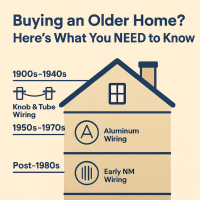
Buying an Older Home? Here’s What You NEED to Know Before You Fall in Love
Wednesday Sep 03rd, 2025
🏡 Buying an Older Home? Here’s What You NEED to Know Before You Sign
Ever walk into a charming older home and feel like you’ve stepped into a different era? The character, the craftsmanship, the hardwood floors that have held generations of stories—it’s easy to fall in love. But here’s the thing: behind those charming details, there could be wiring, plumbing, insulation, asbestos, or heating systems that date back decades. And while that doesn’t mean you should run the other way, it does mean you need to know what to look for before making one of the biggest investments of your life.
So, let’s break down the hidden layers of older homes—what’s worth celebrating, and what deserves a closer inspection.
⚡ Electrical Systems: The Backbone of Safety
If you’re buying a home that predates the 1990s, the wiring is one of the very first things you’ll want to check. Different eras brought different standards—and not all of them align with today’s Canadian Electrical Code.
🔹 1900s–1940s: Knob-and-Tube Wiring
This early system used porcelain knobs and tubes to run wires through walls and ceilings. Back then, it was cutting-edge. Today, it’s a red flag. Why?
-
No grounding—making it unsafe for modern appliances.
-
Cloth insulation—over time, it deteriorates, exposing bare wires.
-
Fire risk—especially if someone has “patched” it with newer wiring.
💡 Most insurance providers won’t cover a home with knob-and-tube unless it’s been replaced or certified safe—something many buyers overlook.
🔹 1950s–1970s: Aluminum Wiring
When copper prices soared in the 1960s, builders turned to aluminum wiring. It seemed like a good idea at the time, but it didn’t age well.
-
Aluminum expands and contracts more than copper, loosening connections.
-
Loose connections = overheating = fire risk.
-
Insurance headaches—many providers demand remediation or full replacement.
🔹 Post-1980s: Safer NM Wiring
By the 1980s, plastic-sheathed copper wiring (often called NM cable) became the standard. If your home has this, you’re in much better shape—but always check for consistency. Many older homes have a mix of wiring systems, which can complicate things.
🚰 Plumbing: More Than Just Pipes
Older plumbing isn’t always obvious until there’s a leak or a costly repair. But history leaves clues.
-
Pre-1970s: Plumbing codes weren’t separated from the National Building Code until 1970, so earlier systems often fall short of today’s safety standards.
-
Galvanized Steel Pipes: Common in mid-century homes, these corrode inside over time, restricting water flow and risking leaks.
-
Lead Pipes: Homes built before the 1950s may still have lead service lines—a major health hazard.
💡 A plumbing upgrade might not be glamorous, but it can save you from both surprise costs and potential health concerns.
🧱 Insulation & Energy Efficiency
Energy efficiency wasn’t much of a concern until relatively recently.
-
Pre-1960s: Many homes had little to no insulation in walls or attics.
-
1970s–1980s: Fibreglass batts became common, but air sealing was inconsistent.
-
Post-2012: Ontario and other provinces tightened building codes to require much higher energy standards (like SB-10 and SB-12).
That means if you’re buying a home built before 2012, there’s a good chance it needs upgrades to meet today’s efficiency standards.
☣️ Asbestos: The Silent Hazard
If the home was built before the 1980s, asbestos might be lurking—and it’s not something to take lightly. When disturbed, asbestos fibres can cause serious health problems.
Where asbestos hides:
-
Pipe and duct insulation
-
Vinyl floor tiles (and their adhesives)
-
Popcorn or textured ceilings
-
Drywall joint compounds
💡 Asbestos isn’t dangerous if it’s intact. It only becomes a risk when cut, sanded, or damaged. That’s why professional testing is key before any renovations.
🔥 Heating Systems: Comfort vs. Cost
Heating is another big-ticket item in older homes. What’s in the basement can tell you a lot.
-
Oil Furnaces (1940s–1960s): Expensive to run today, and buried oil tanks can cause major environmental headaches.
-
Electric Baseboards (1960s–1970s): Still common, but energy-hungry compared to modern options.
-
Boilers & Radiators: Reliable, but often inefficient and costly to upgrade.
-
Forced-Air Gas Furnaces (1980s–1990s): Much better efficiency, but many from that era are reaching end-of-life now.
💡 Ask about service records. A well-maintained 20-year-old furnace may outlast a neglected 10-year-old one.
📝 Checklist for Evaluating Older Homes
Here’s a quick snapshot of what to keep an eye on when touring an older property:
| Feature | What to Watch For |
|---|---|
| Wiring | Knob-and-tube (pre-1950s), aluminum (1960s–70s), or mixed systems |
| Grounding | Older outlets may not be grounded |
| Plumbing | Galvanized or lead pipes; pre-1970s codes |
| Insulation | Limited or outdated; possible asbestos |
| Heating System | Oil, electric baseboard, or aging boilers/furnaces |
| Asbestos Risks | Ceilings, pipes, tiles, drywall compound |
| Insurance Impact | Coverage often depends on wiring, asbestos, or heating system safety |
🎯 Final Thoughts
Older homes have a charm you just can’t recreate in new builds. They come with history, character, and craftsmanship—but also with quirks and sometimes costly surprises. Knowing which era your home was built in gives you an edge:
-
Electrical safety: Know your wiring.
-
Plumbing health: Check those pipes.
-
Insulation & asbestos: Don’t overlook what’s behind the walls.
-
Heating: Factor in both comfort and cost.
With the right knowledge—and the right advice—an older home can be a dream instead of a money pit.
Thinking of buying or selling an older home? Let’s walk through the details together so you can make the best move possible.
📩 DM me anytime to start the conversation.


Post a comment