
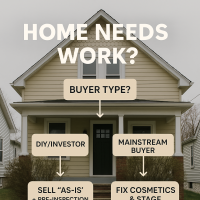
Ever thought: “Should I pour money into renovations or just price this place to sell 'as‑is’?” It’s a question every seller of a fixer-upper asks—and getting the answer right can mean the difference between a quick sale or being stuck on the market.
Why the dilemma?
In Canada, home inspections are standard and buyers expect full disclosure on issues. Renovation costs are climbing, creating chooser fatigue, with many buyers now shying away from homes needing serious work. But fixer-uppers still have fans—especially DIYers and investors. The key is deciding whether to invest in repairs or lean into your pricing strategy.
Fix It or List As-Is? Your 5 Point Decision Guide:
-
Know your buyer
-
DIY homeowners want projects.
-
Investors look for underpriced deals.
-
Move-in-ready buyers generally avoid work.
If you're aiming at a broad market, repairs help. But for renovation-savvy buyers, "as-is" can work—if the price is right.
-
Understand costs vs. return Estimate renovation costs:
-
Paint, fixtures: low cost, high return.
-
Flooring, kitchens: moderate ROI.
-
Roofs, foundations: highest cost, lowest return.
Focus on updates with the strongest bang for your buck.
-
Pre-List Inspection A pre-inspection builds trust, shows transparency, and sets expectations early. This can help avoid post-offer renegotiations.
-
Price Strategically Two paths:
-
Fix small issues, stage, price near comparables.
-
List "as-is" at a discount—typically $10K–$25K under similar homes.
Price based on After-Repair Value (ARV), minus estimated costs and profit margin.
-
Market It Right
-
Highlight structure and potential if selling "as-is."
-
Emphasize upgrades if you fix up.
-
Curb appeal still counts!
-
Promote nearby amenities to boost appeal.
Scenarios:
A. Fix basic cosmetics
-
Paint, fixtures, deep clean.
-
Price 5–7% below renovated comps.
-
Pros: quick sale, less pushback.
B. Sell “as-is”
-
Disclose issues, get inspection.
-
Price 10–20% below market.
-
Pros: no reno hassles. Cons: potentially longer time on market.
C. Selective upgrades
-
Address major deterrents (roof, electrical).
-
Refresh flooring, paint, curb appeal.
-
Price 5–10% below fully upgraded homes.
Tools:
-
ARV: check comps.
-
Get 2–3 contractor quotes.
-
Pre-inspection builds buyer trust.
-
MLS: emphasize structure or upgrades.
-
Time it: April–June = best.
ROI Examples:
-
Paint & stage: $2K = ~100% ROI
-
Flooring: $3.5K = ~90% ROI
-
Landscaping: $1.2K = up to 15% value boost
Final Takeaway:
Selling a home that needs work? It's all about strategy:
-
Know your buyer.
-
Prioritize high-ROI fixes.
-
Pre-inspect if selling "as-is."
-
Price with purpose.
-
Market it smartly.
Visual Recap: [Home Needs Work?] ↓ [Buyer Type?] → DIY/Investor → Sell “As-Is” + Pre-Inspect → Price 10–20% below comps → Mainstream Buyer → Fix & Stage → Price 5–7% below reno homes
Thinking about selling a fixer-upper and not sure which path is right for you? Let’s chat. I’ll help you map out a plan that makes sense for your timeline, your goals, and your property.


Post a comment